
Cockroaches are more than an unpleasant sight in Karachi. They transmit disease, and threaten sanitation. Engaging the services of a cockroach exterminator in Karachi is an intelligent decision.
In the following article you will find deep information that is easy to read, about the risks, methods, precautions and prevention. You will see what professionals do during assessment, treatment and follow-up. Additionally, you will see what to look for when hiring and related costs. Let’s get to it.
Why You Need a Cockroach Exterminator in Karachi
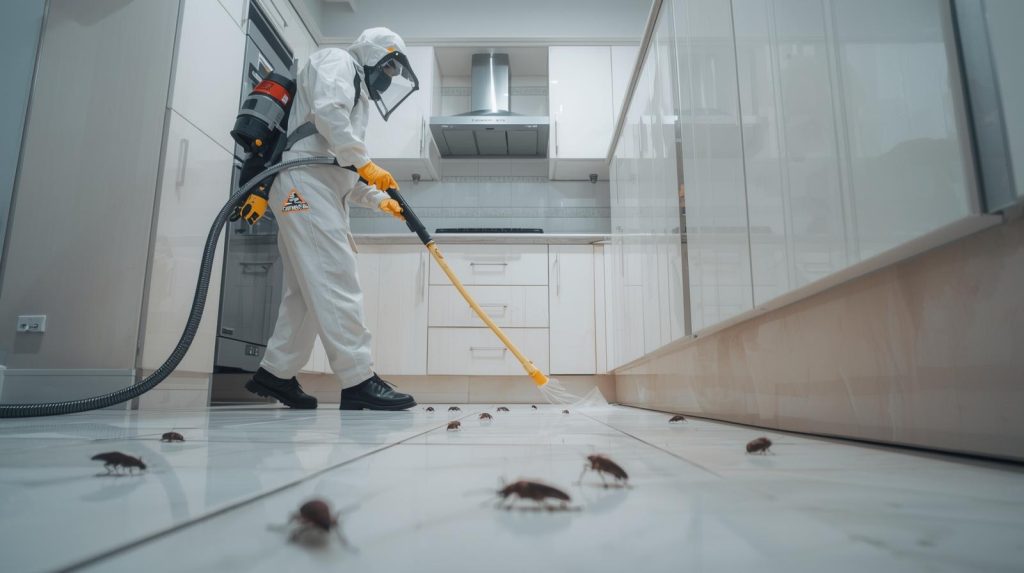
Karachi’s warm climate and dense housing make cockroach infestations common. If you ignore the issue, cockroaches multiply fast. They hide in cracks, drains, behind appliances. As they spread, they contaminate food, surfaces, and air. You may think DIY sprays help, but they often fail to reach deep hidden spots. Professionals use proven methods and protect your health better.
When you hire a Cockroach Exterminator in Karachi, you get a systematic approach: inspection, treatment, follow‑up, and prevention. That approach reduces the chance of recurrence. Also, professionals use chemicals legally approved in Pakistan and know safety protocols. That safeguards your family and pets.
Health & Hygiene Risks
Cockroaches carry bacteria such as Salmonella, E. coli, and Pseudomonas. When they crawl over utensils or food, they leave microbes behind. These can cause diarrhea, food poisoning, and infections. In people with asthma or allergies, cockroach droppings and shed skins can trigger attacks or breathing trouble.
They also generate foul odors in infested homes. In commercial kitchens or hospitals, this is unacceptable. In worst cases, cockroaches infest stored grains, packaging, or food supplies. That leads to economic losses. You must see them not just as pests, but as health hazards.
Types of Cockroaches Common in Karachi
The most frequent species in Karachi are the German Cockroach (Blattella germanica) and the American Cockroach (Periplaneta americana). The German cockroach is small (about 1.3 cm), light brown, and prefers warm indoor places. The American cockroach is larger (around 3 cm), reddish brown, and is often found in drains or external walls.
Another species is the Oriental Cockroach (Blatta orientalis), which prefers damp and dark spots like basements or sewers. Recognizing species matters, because treatment methods differ. German cockroaches reproduce rapidly. So effective control must target eggs, nymphs, and adults all at once.
Inspection / Assessment
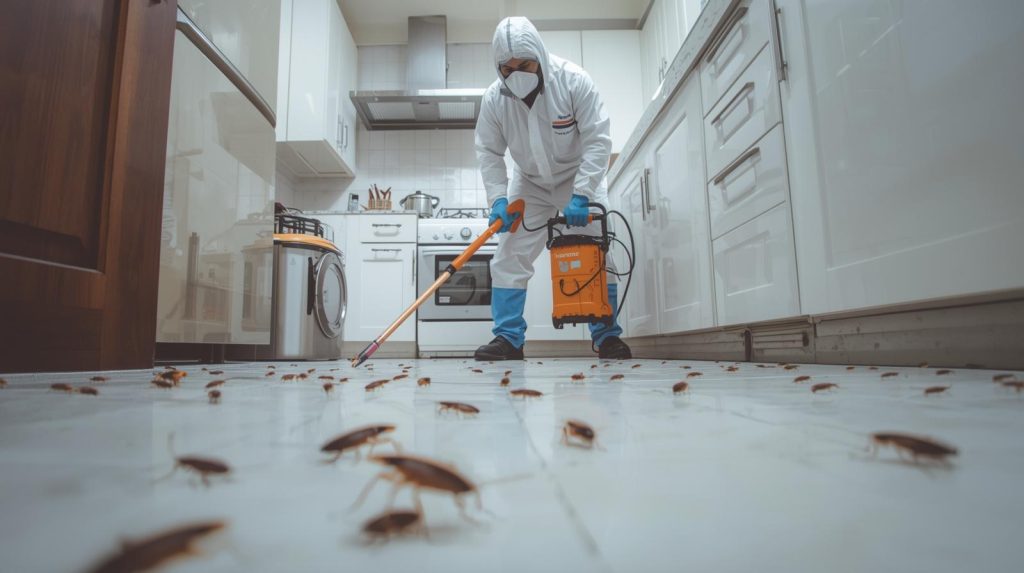
A professional begins by walking through your living spaces. They look for droppings (tiny dark specks), egg casings, molted skins, and live roaches. They inspect kitchens, bathrooms, behind refrigerators, wall cracks, drains, and under sinks. Sometimes sticky traps or monitoring devices are placed to capture roaches overnight.
They grade the infestation as light, moderate, or heavy. In a light case, roaches are seen only occasionally. In moderate, multiple spots show activity regularly. In heavy infestations, you might see many roaches in daylight, or find breeding clusters. This assessment guides the treatment plan.
Treatment Methods
Professionals use various methods, often combined, depending on severity.
Gel baiting involves placing small doses of bait in cracks, corners, and crevices. Cockroaches eat the bait and return to nests, poisoning others. Residual spraying uses insecticide solutions that cling to surfaces. When roaches walk over them, they pick up lethal doses. Insect Growth Regulators (IGRs) prevent young roaches from maturing or reproducing. Fumigation is used only when infestations are massive or in multi‑unit buildings.
Each method has pros and cons. Gel baits are targeted and relatively safe indoors. Residual sprays cover more area. IGRs provide long‑term disruption of reproduction. Fumigation is disruptive and costly, but effective for large scale infestations.
Preparation Before Treatment
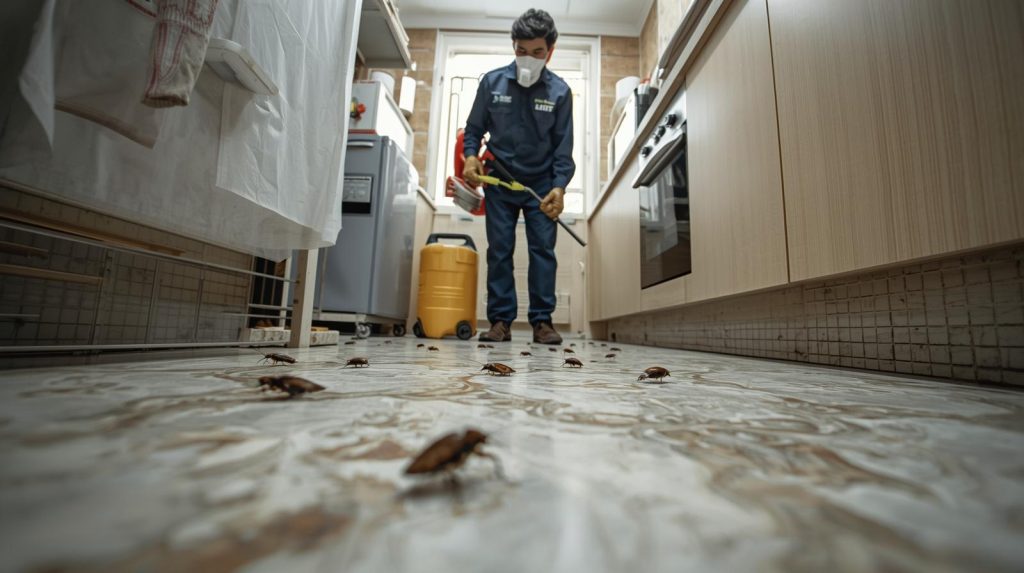
Before treatment, you must clean and clear the area. Remove food, dishes, utensils, and cover or store them safely. Wash surfaces lightly—do not deep scrub, because residue helps bait stick. Clear clutter and boxes so exterminators can reach hiding spots. Move furniture away from walls, and open access panels if present.
Remove pets, fish tanks, or temporarily relocate them. Seal or cover aquariums. Inform the exterminators of any allergies, children, pregnant women, or special needs in the household. Doing this prep ensures the treatment works better and reduces risks.
Execution of Treatment
Exterminators will wear protective gear (gloves, masks) and work systematically. They apply gel baits into cracks, spray residual insecticides on baseboards and wall voids, and may inject into drains or plumbing holes. If IGRs are used, these are applied in areas where eggs and young roaches would grow.
Treatment time depends on house size and infestation grade—it may take a few hours to a full day. During treatment, you may be asked to vacate certain rooms temporarily or stay out for a few hours. The professionals will warn you about re-entry time, ventilation, and washing surfaces later.
Follow Up & Monitoring
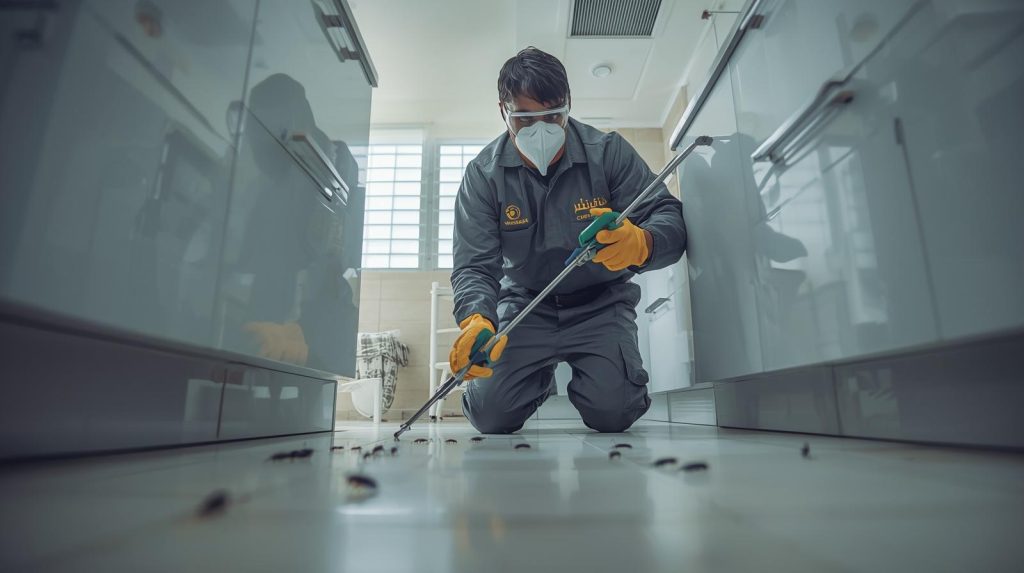
After treatment, you should see reduction in roach activity within 24–72 hours. However, total elimination may require multiple visits. Many exterminators offer a warranty period or guarantee: if roaches reappear within a set time, they return free or at reduced cost.
You can place sticky traps or monitoring stations to detect survivors. Document where you see any activity. An exterminator may revisit and reapply treatments only where needed. Continuous monitoring helps prevent resurgence and ensures the long‑term success of the job.
Prevention Measures
Preventing cockroaches is as important as extermination. Seal all entry points: cracks in walls, gaps around pipes, vents, drains, and door thresholds. Use mesh or covers on drains. Keep kitchens and bathrooms dry and clean. Eliminate standing water and leaks. Store food in sealed containers and take out garbage regularly.
Clean regularly: sweep, mop, vacuum so that crumbs or residues are removed. Avoid leaving pet food sitting overnight. Use baits or traps as maintenance tools monthly. In commercial settings, enforce sanitation rules, regular inspections, and prompt repairs of plumbing. Prevention stops infestations before they begin.
Safety & Regulation
In Pakistan, chemical use is regulated by laws under the Ministry of Climate Change and environment agencies. Only approved pesticides may be used. Exterminators must follow safety protocols. They should supply you with MSDS (Material Safety Data Sheets) for chemicals used.
Always choose a licensed pest control company in Karachi. Demand proof of license, certificates, and past client references. Check that chemicals are WHO‑approved and safe for homes with children or pets. Ask for detailed treatment plans and safety instructions. If any symptoms develop (skin irritation, breathing issues), contact the specialists immediately.
How to Choose the Right Cockroach Exterminator in Karachi
Start by verifying credentials and licensing. Ensure the company has experience dealing with local cockroach species. Ask for before‑and‑after photos or case studies. Read customer reviews, and check success rates. Confirm whether they provide follow‑ups and warranty.
Also compare service packages: do they offer single treatments or recurring plans? Are emergency services offered (e.g. for restaurants)? Are all costs transparent? A good exterminator will explain the plan and costs clearly before you commit.
Real Case Study: Successful Cockroach Extermination in Karachi
In early 2023, a commercial kitchen in Saddar, Karachi, faced a severe cockroach infestation. Staff reported seeing dozens of cockroaches during the day, especially around storage shelves and dishwashing areas. Food inspectors even threatened temporary closure due to hygiene violations.
A professional Cockroach Exterminator in Karachi was hired. The team began with a full inspection, identifying multiple nesting areas behind appliances and inside floor drains. They used a combination of gel baiting, IGRs, and residual sprays. The kitchen was closed for 24 hours for safe treatment.
Within 48 hours, dead roaches were visible across the site. Over the next two weeks, traps showed no further activity. A follow-up treatment was done after three weeks, and the business was cleared by inspectors.
Since then, the restaurant has followed strict prevention rules, including monthly inspections. This case proves that fast, expert action can not only save a business but also create long-term results
Pricing Guide in Karachi
Costs vary by size, infestation severity, method, and property type (residential, restaurant, warehouse). For a small flat, expect fees in a modest range. A large house or commercial building will cost more. Fumigation is the most expensive. Many companies offer discounts for multi‑room treatments or yearly contracts.
| Property Type | Approx. Cost Range* | Typical Methods Used |
| Small apartment | Moderate range | Gel baiting + residual spray |
| Medium house | Higher | Combined methods + IGR |
| Commercial kitchen | High | Residual spray + monitoring |
| Large building / shop | Very high (fumigation) | Fumigation + follow up treatments |
FAQ”s
How long does cockroach treatment take to work?
In most cases, you’ll start seeing fewer roaches within 24 to 48 hours. However, full results may take up to two weeks, especially if the infestation is heavy. Some treatments are designed to work slowly to ensure they reach the entire colony.
Is the treatment safe for kids and pets?
Yes, when applied correctly by licensed professionals, the chemicals used are safe for both children and pets. Still, it’s a good idea to keep them away from treated areas for a few hours and follow any safety instructions given.
What if cockroaches come back after treatment?
Most professional exterminators in Karachi offer a warranty or guarantee period. If roaches reappear within that time, they usually come back for a free or discounted re-treatment. Always ask about this before hiring.
Can I get rid of cockroaches without hiring an exterminator?
DIY methods like sprays and traps might help in very mild cases. But cockroaches are tough. If you miss hidden nests or eggs, the problem will come back fast. For a lasting solution, professional help is recommended.
How often should I schedule pest control in Karachi?
For homes, a visit every 3 to 6 months works well for prevention. In high-risk places like restaurants or bakeries, monthly checks may be necessary. Your exterminator will suggest a schedule based on your location and risk level
Conclusion
If you are dealing with a cockroach problem in Karachi, hiring a Cockroach Exterminator in Karachi is your safest bet. They bring expertise in inspection, treatment, and safety regulations. You reduce health risks and get lasting relief. Follow prevention measures and monitor your space. With the right professional partner, you can live cockroach‑free.